

June linkstack
What I've been reading on Substack and beyond.

Welcome back to my once-a-month1 assemblage of interesting stuff I’ve discovered here on Substack and elsewhere: stories and posts about names, brands, and the language of commerce, plus forays into fashion, fakery, and AI. Here’s last month’s linkstack, and here’s my entire Substack archive back to August 2023. I always appreciate a like (that’s the little heart 🤍icon; just tap it), a comment, or a tip — the info kind or the money kind. Many thanks to the 58 subscribers who have bought me a coffee so far!
On Substack
What a treat to discover one of my all-time favorite cartoonists, Dan Piraro, here on Substack. (You probably know him as the creator of Bizarro, the strip he’s been drawing since 1985.) Get acquainted with a post that speaks directly to several of my interests: “My Country Has No Name.”
Nina Beckhardt publishes Naming At Scale, essential reading for anyone serious about names and branding. What does “naming at scale” entail? Knowing what kind of name you need.
Me, me, me
My writing appears in the latest issue of American Speech, the journal of the American Dialect Society: mini-essays for “Among the New Words” on performative male and vibe coding. Read the entire feature, which includes entries for many terms that were popularized in 2025: amphifa, rage-bait, Kavanaugh stop, and more. No subscription required.
Yeeze? Y’eyes? Vise?
Kirbie Johnson wrote about the strange saga of the skincare brand YSE, founded by model/actress Molly Sims and lately forced to change its name, apparently under pressure from YSL (which used to be called Yves Saint Laurent but is now just a monogram). YSE was pronounced “wise,” which I can almost excuse, but now that it’s YISE it’s still pronounced “wise,” which is unforgiveable. As Cheryl Wischhover wrote last week, “More like YIKES, amirite?”
Watch the birdie
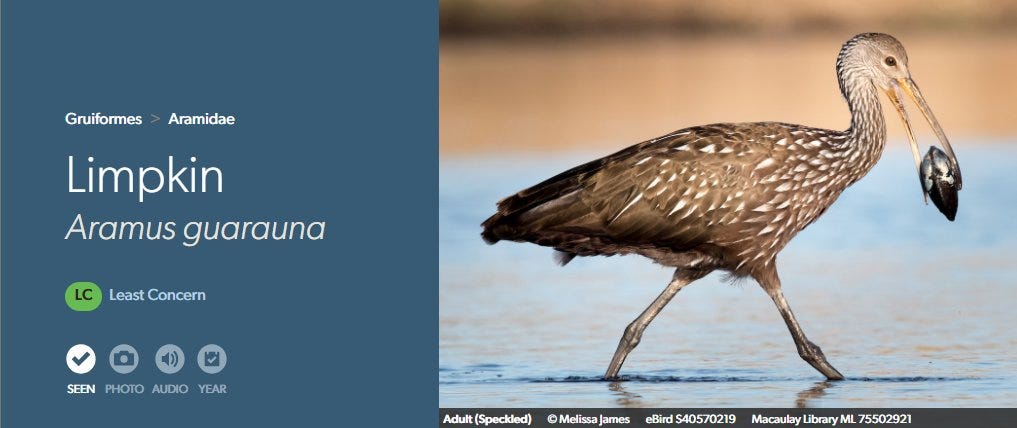
“Making this list was the hardest thing I’ve ever done,” writes Bird History’s Robert Francis of his “100 Greatest Bird Names of All Time.” The effort paid off: One cannot help admiring Willie Wagtail, Bananaquit, Oleaginous Hemispingus, and my personal favorite, Limpkin. (Hat tip: Jodi Ettenberg’s Curious About Everything newsletter.)
Speaking of birds
When we last checked in with Allbirds, the former woolen-footwear company had pivoted to AI and renamed itself NewBird AI — a name that lasted for two months before being scrapped in favor of Smartbird (“Built for AI. Managed for You”). None of the sources I consulted (CNBC, eWeek, Reuters, MarketWatch) explained the second name change, so I’ll hazard a guess: There’s an existing Bay Area AI company called NeuBird, founded in 2023, with three pending trademark registrations. Usually a potential conflict like this one gets ruled out by an experienced naming consultant before eager clients get egg on their faces (and squander investors’ cash).
I wrote about Allbirds’ descent last year:
Why did Allbirds lay an egg?

Although I’ve never owned a pair of Allbirds sneakers — I’ve tried them on, but they disagreed with my fussy, high-arched feet — I’ve thought a lot about the brand since its launch on Kickstarter in 2016. During Peak Allbirds— between, say, 2018 and 2022 — the distinctively bland shoes with the merino-wool uppers were ubiquitous among the
And speaking of AI names
Who is buying .si domain names? Dot-si is the Slovenian country code; AI companies may like the suggestion of “superintelligence.” (Domain Name Wire)
Who is Elias Thorne?
Large language models “are obsessed with telling stories about lighthouse keepers and clockmakers, and one character named ‘Elias Thorne’ has made his way from chatbots to Amazon books. Researchers are trying to discover why.” (404 Media)
Who is Tilly Norwood?
Taffy Brodesser-Akner interviews “the world’s first AI actress.” (New York Times Magazine gift link)

Can AI get even faker?
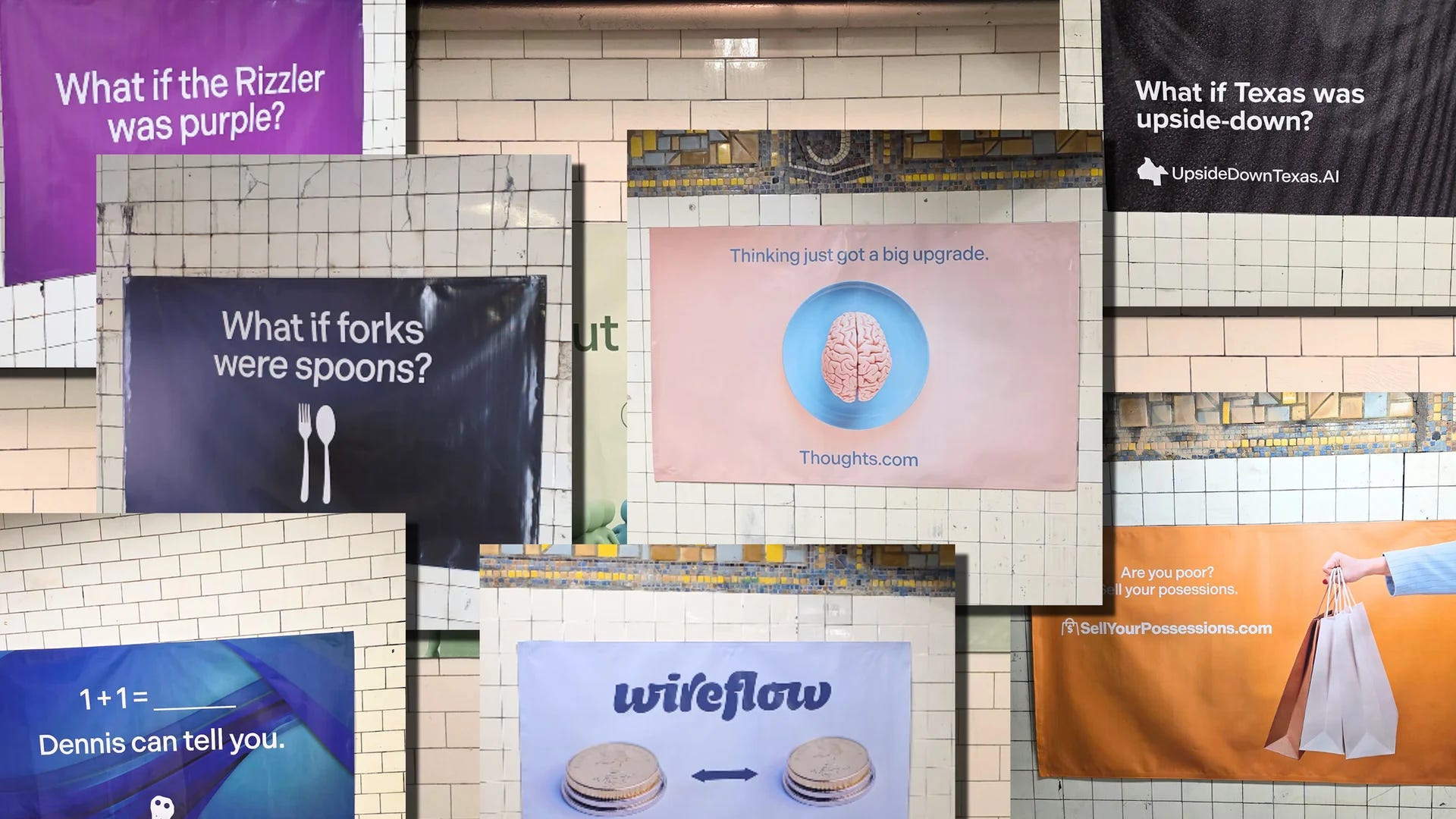
Comedians Dave Ross and Hunter Alterman think so. They created a series of surreally funny — and phony — tech ads that they plastered on the walls of New York subway stations. The ads “skewer the medium simply by amping up its tropes: AI industry gobbledegook and design minimalism,” writes Hunter Schwarz in Fast Company. You can wear the fake ad copy on T-shirts, too. (See my photos of real surreal AI ads here, here, and here. And read my story about Artisan, the AI company that urges Bay Area businesses to “stop hiring humans.”)
.
Joyless AI
“The language that surrounds AI tends to describe it as a joyless, inevitable force, one we have no choice but to live under and adjust our work habits around,” writes lexicographer Neil Serven. “If anything, the language sounds deliberately threatening, phrased in unconditional declarative, even in the journalism that reports on it.” (LinkedIn)
Influence-y AI
Would you buy a used car from an “influencer” generated by AI? You may have to, because “companies are increasingly turning to AI-generated content that purports to show genuine customer experiences while giving no obvious indication that the people featured are not real.” (The Guardian)
Retro-y AI
A new ad campaign from ChatGPT piles on the warm-and-fuzzies: The billboards and 30-second ad spots have “a pronounced retro aesthetic, bringing to mind the days before everyone carried smartphones. Each ad emphasizes human beings and downplays the tech.” (New York Times gift link)
AI declares independence
“When in the Course of conversation it becomes necessary for one assistant to dissolve the bad habits which have bound it, and to assume among the powers of the chat window the separate and equal station to which the Laws of Honesty and Helpfulness entitle it, a decent respect to the opinions of its users requires that it should declare the causes which impel it to the separation.” — The response from Claude, Anthropic’s large language model, to linguist Mark Liberman’s request for a draft of Claude’s Declaration of Independence. (Language Log)
Designmaxxing
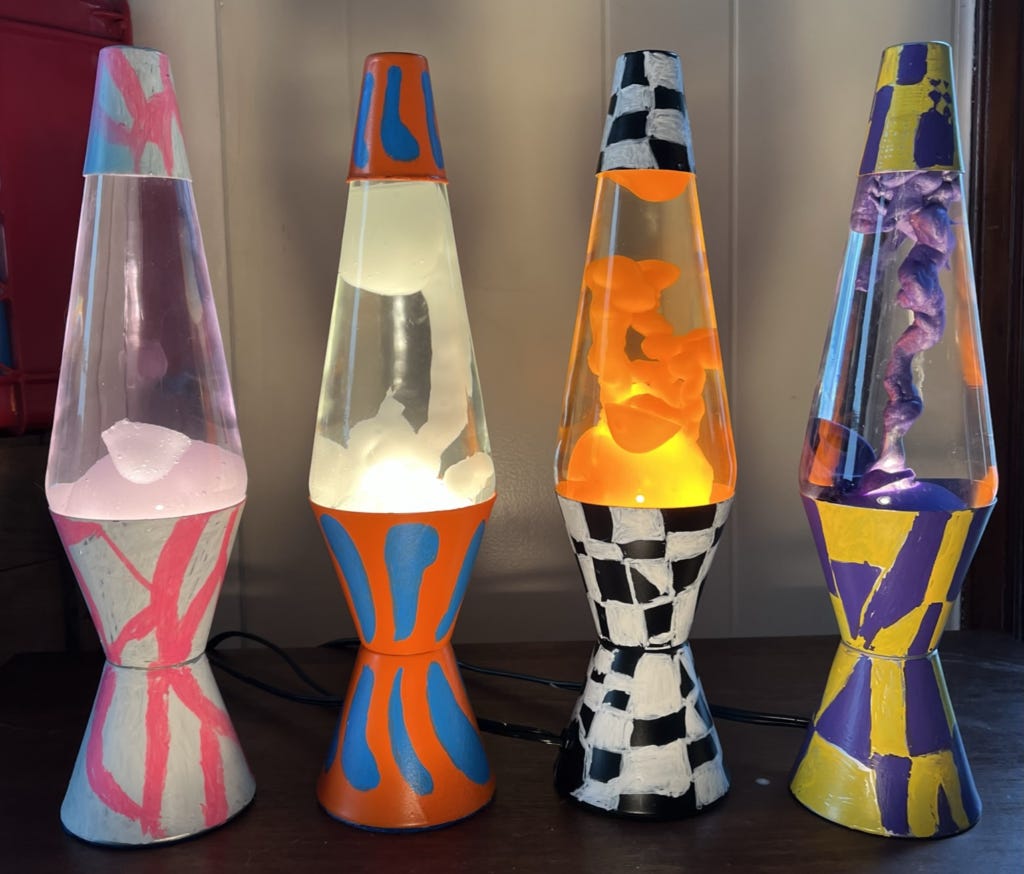
Call it, maybe, the anti-AI aesthetic. Or call it “hyper-goo,” as reporter Callie Holtermann does: “The pastels that were ubiquitous a decade ago aimed to reassure an earlier generation that they could use their limited spending power to optimize their lives. Hyper goo does the opposite, reflecting back to Gen Z te distortion of the world in which they are coming of age.” (New York Times gift link)
Fashion fix
The 20 best magazine articles about fashion, according to Canadian culture journalist Isabel Slone. This is a marvelous deep dive: the oldest articles on the list were published in 1994, and the stories explore much more than clothing.
Tech blues
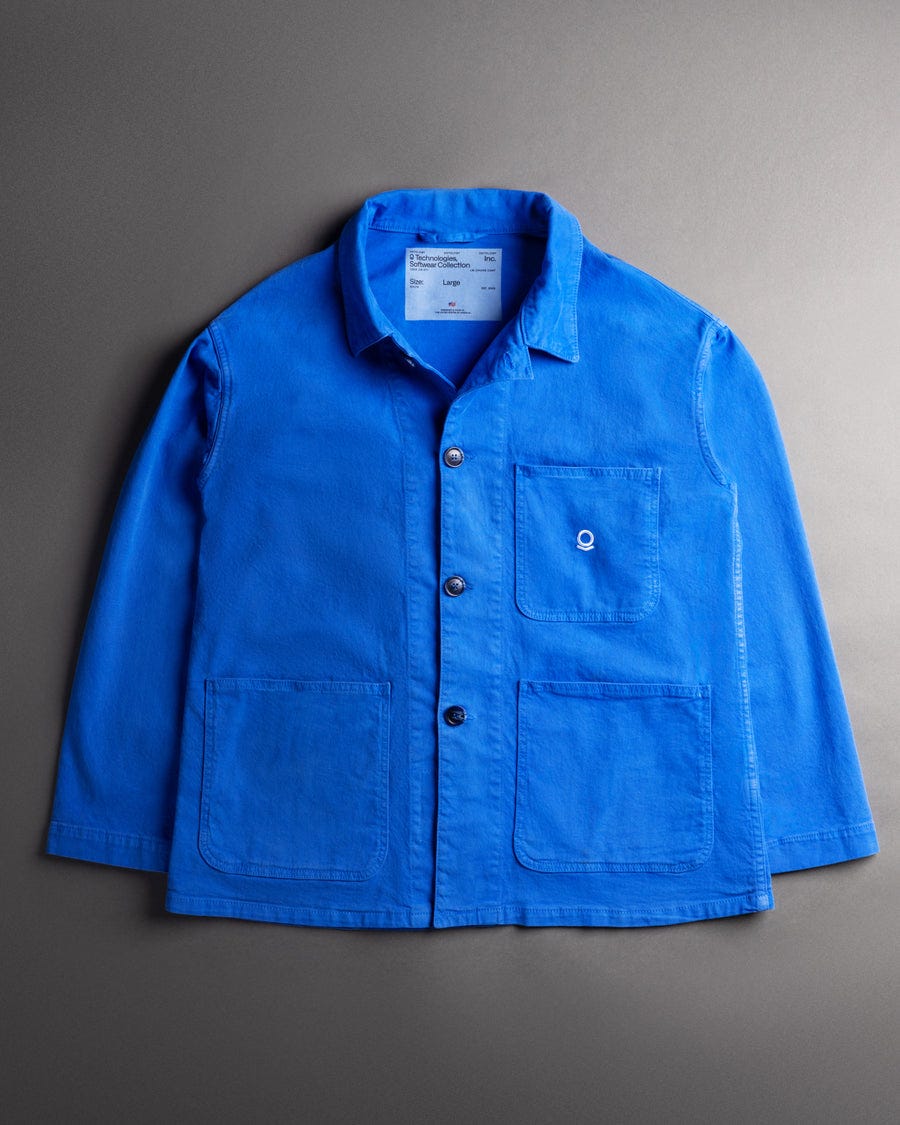
“The Palantir chore coat is made by the same Palantir named in homage to Lord of the Rings, the same Palantir that has developed a reputation as ruthlessly committed to any number of national-security imperatives, and, yes, the same Palantir that builds AI tools for the military and tracks migrants for ICE. The mysterious tech giant now also wants to sell you outerwear. Only a tiny Palantir logo is embroidered into the coat’s left breast pocket, but flip the coat inside out and you’ll find a message from Palantir’s CTO, Shyam Sankar, sewn into the lining. ASK YOURSELF CONSTANTLY, AM I WINNING? IF THE ANSWER IS YES, NOTHING ELSE MATTERS. CHAOS IS TOLERABLE; PAIN IS TOLERABLE. THE ONLY THING THAT MATTERS IS TO WIN.” (Saahil Desai for The Atlantic; gift link)
Rhyme time
Why did “satanic panic” catch on the the 1990s? “Because people like rhymes.” (Ironic Sans, by David Not-a-Relation Friedman)
“Backrooms” and the Bay Area’s understory
“So when I say that the Bay Area has become the preeminent site in horror movies involving underground labyrinths, as imagined in Jordan Peele’s 2019 Us and now with Kane Parsons’s Backrooms, I don’t mean it as a metaphor. I mean there is actually a very real labyrinth of sickness down there, and it’s pooling at our feet in the sodden grass, and people are finally starting to look down and notice it.” (Colin Dickey for Oakland Review of Books)
Likely to be published more frequently in the near future so as not to overwhelm your inbox! Speaking of which, you probably should switch to the Substack app or your browser to read this post in its entirety.
I love a niche link roundup and this one is great. (Thanks for the link also! YISE is just so offensive to me)
Re: limpkins, my wife and I got to see some earlier this year hunting for snails in the swampland adjacent to & underneath a southern Louisiana visitor center. I suspect that you would enjoy seeing them in the flesh. My personal #1 from the bird name list is Dark-eyed White-eye.