
May linkstack
Typos, typefaces, hallucinations, slop, and more.

June is on the foggy horizon, which means that here in the Bay Area we’re hauling out our puffer jackets and fleecy beanies, bracing for the inevitable cold, gray, blustery summer-in-name-only. You think I exaggerate? On one July day last year I boarded a crosstown San Francisco Muni bus whose driver had turned on the heat. In July.
But enough of my pointless sniveling! Let’s get to the links: fun and edumacational stuff about words, brands, names, the AI-ification of everything, and even fashion because I care about that, too. Craving more? See my April linkstack. And here’s my entire Substack archive back to August 2023.
A reminder: This newsletter remains 100 percent free for all. I do not accept advertising or affiliate links. I do, however, accept and appreciate donations through the Buy Me a Coffee platform. You can even sign up for monthly contributions.
Wacky Wiki
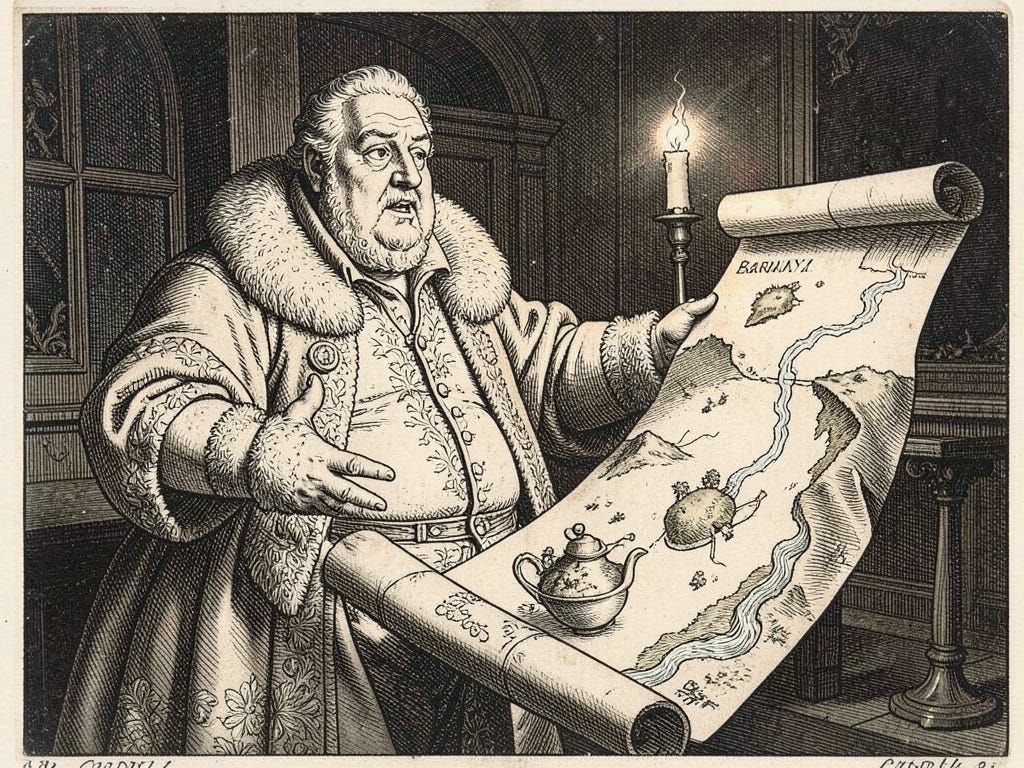
Halupedia is “an infinite, hallucinated encyclopedia” created by Bartłomiej Strama, a young Polish software engineer who built the site “after a drunk night with my friend.” According to Gadget Review, “The site operates like Wikipedia’s evil twin—every link leads to an entry that doesn’t exist until you click it. Search for anything, and the AI backend fabricates an article in the ‘deadpan register of a 19th-century scholarly press.’ Want to read about ‘quantum cheese theory’? Halupedia will generate a thoroughly convincing academic treatise complete with citations to nonexistent research papers.” Gizmodo’s appraisal is even more hallucinatory, calling Halupedia “a sort of RAM-hoovering, water-guzzling, bullshit-munching ouroboros, an unholy circular undulant with Jensen Huang’s face at one end and Sam Altman’s at the other, slowly human-centipeding both itself and the internet into oblivion.” Try it out yourself, but heed the home-page warning: “Nothing on this site is true.” (Relevant: my February 2023 post on AI hallucinations.)
Which wiki?
Guess the Wikipedia article from its categories. (Hat tip: Go Fug Yourself)
Typos are good now?
“Some job applicants are intentionally adding typos to their cover letters to prove that they, and not an AI program, wrote them.” (“The Typo Vibe Shift,” by Michael Waters for The Atlantic; gift link)
World-changing typefaces
Five typefaces with outsize impact. One of them is the much-maligned Papyrus, whose influence “demonstrates that a typeface can gain prominence through exposure rather than technical perfection.” (Twos Studio, hat tip Erik Hansson on Bluesky)
English —> LinkedIn-ese
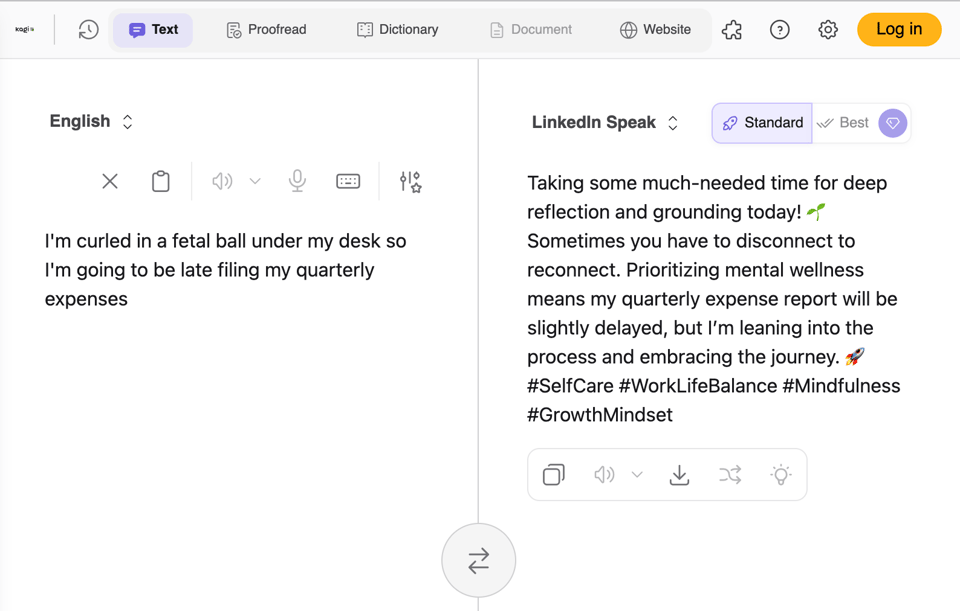
“Someone made a little Kagi translator that takes a normal English sentence and translates it into the clotted weaselspeak one finds in the average LinkedIn post.” (Clive Thompson)
Slop for all
AI slop images, slop bowls, fast fashion slop, short form content slop: “When did we get so submerged in the slop-ified muck?” asks New York Times reporter Emma Goldberg (“Living the Slop Life,” New York Times gift link). See also slopaganda, sloppunk, sloppelganger, slopulism, and my November 2024 post:
Word of the week: Slop

We already know that artificial-intelligence (AI) has a hallucination problem: generating confident responses unjustified by the AI’s training data.
Name changes
The long-running Broadway hit My Fair Lady (1956) was was initially titled My Lady Liza. During its development Bye Bye Birdie (1960) was called Let’s Go Steady. Broadway shows that changed their names (Broadway World).
Major League Baseball’s San Diego Padres changed the name of the “FTD Burger,” a longtime favorite at Petco Park, after fans of the rival Los Angeles Dodgers claimed the initials stood for “Fuck The Dodgers.” (And here I thought it was all about flowers.) The team kept the initials, which now stand for “For The Dugout,” “For The Division,” or “For The Diegans” — it isn’t quite settled. (Sports Illustrated; hat tip MJF)
China imposed sanctions, including an entry ban, on Marco Rubio after he “fiercely championed human rights” in that country while serving as a U.S. senator. So how was he able to join a presidential mission to China earlier this month? Through a linguistic workaround: “The Chinese government and official media began using a different Chinese character for ‘lu’ to represent the first syllable in his surname.” (The Guardian; hat tip Grant Barrett)
Word watch: Peanut butter raise
“Peanut butter raises” are “across-the-board pay bumps to employees, spread out thinly like a creamy condiment on bread.” The term has been around in one form or another for a couple of decades and got a boost after the January 2026 release of a report by Payscale, a compensation data company. (New York Times gift link)
Fashion break!
What should have happened in The Devil Wears Prada 2: “Why not have Andy and Miranda team up—hey, even throw Emily (Emily Blunt) in there, she’s fun—for an entirely new venture? Maybe a Substack/podcast mini-empire called Miranda, for women who love to work?” - Jennifer Keishin Armstrong (via Alison Gary on Wardrobe Oxygen)
A therapist analyzes leggings brands: “Look at how [Lululemon] names their leggings: The Align. The Define. The Swift Speed. The Fast and Free. The Unrestricted Power. These are not names for pants; these are Marvel movies. And they are names that imply that they come with superpowers.” - Tracey Cleantis-Dwyer
Who else loved the U.S. What Not to Wear (2003–2013)? Good news for us: Hosts Stacy London and Clinton Kelly are back, this time noshing popcorn on a king-size bed and critiquing the costumes in some memorable movies: Dirty Dancing, 9 to 5, Tootsie, and more. Subscribe to Why’d They Wear That? on YouTube.
Infectious names
On his Mashed Radish blog, John Kelly examines the etymologies of two disease names in the news: hantavirus and ebola.
That one baby name
The fastest-rising baby name of the year in the U.S. for two consecutive years is … Ailany? News to me, but three of the experts I follow were on it: Laura Wattenberg (Namerology), Hannah Emery, PhD (Janus Name Journeys), and Clare Green (Nameberry). Green writes: “Fun, bright, and melodic, Ailany is a modern Hispanic name with multicultural influences. It broke into the US top 1000 for the first time in 2023 and by 2024, it had risen over 750 places to sit just outside the Top 100.”
Mispelled Misspelled words
Just in time for the Scripps National Spelling Bee, which concludes this evening, here’s a list of the most misspelled words in the U.S. Topping the overall list: bougie. In California: different, which I guess some people like to spell diff’rently. (Language Log)
Tolkien vs. the tech right
“J.R.R. Tolkien was famously anti-tech and anti-government … If he were alive in the age of Palantir, he might not be thrilled that a tech company with lucrative government contracts is name-checking his creations.” And it’s not just Palantir, notorious for its alliance with ICE: Tech companies called Mithril, Anduril, Erebor, and Narya all took their names from the Lord of the Rings trilogy. (Benjamin Stephen for Vox video, via Kottke.org, which offers some additional data points)
Enduring coolth
Why “cool” is still cool. “Most slang words come and go, but there’s one undisputed king that’s over 100 years old and still as relevant as ever.” (Laughing Squid)
Kudos to you for this collection, and also to Clive Thompson for his wonderful, wildly insulting description of corporate writing style as "clotted weaselspeak." I can't possibly beat that, so I'm going to steal it.
Isn't clotted weaselspeak something they consume in England?