
The null set
What's the story behind all the negative brand names?

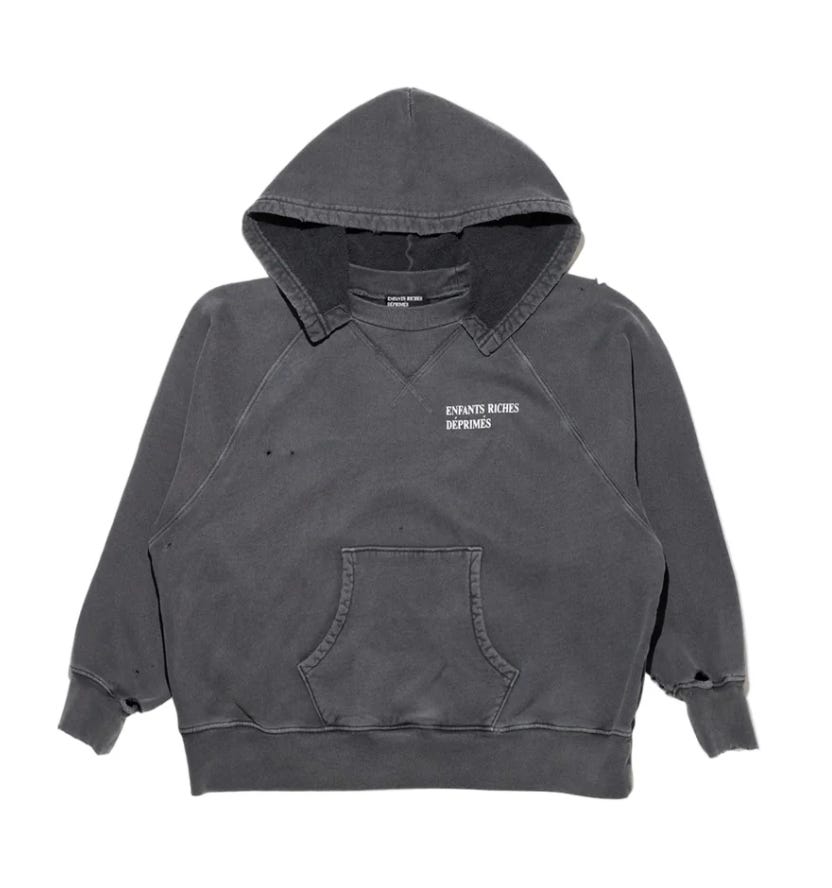
If you were at Paris Fashion Week earlier this month, you might have encountered the creations of an avant-garde brand known for its minimal output and maximal prices: T-shirts for US$700 to $1,800; jackets for $95,000. The brand, co-founded in 2012 by conceptual artist Henri (né Henry) Alexander Levy, is known by its monogram: ERD. The initials stand for Enfants Riches Déprimés, which translates to “Depressed Rich Kids.”
Alternatively, you might have viewed the Autumn/Winter 2026 collection of a small Paris-based brand that sent some of its models down the catwalk with whitewashed faces, shaved heads and eyebrows, and opera gloves with blood-red palms; one model wore a voluminous jacket covered in dollar bills. The label, which is said to have a cult following, is called Matières Fécales, or “fecal matter.”
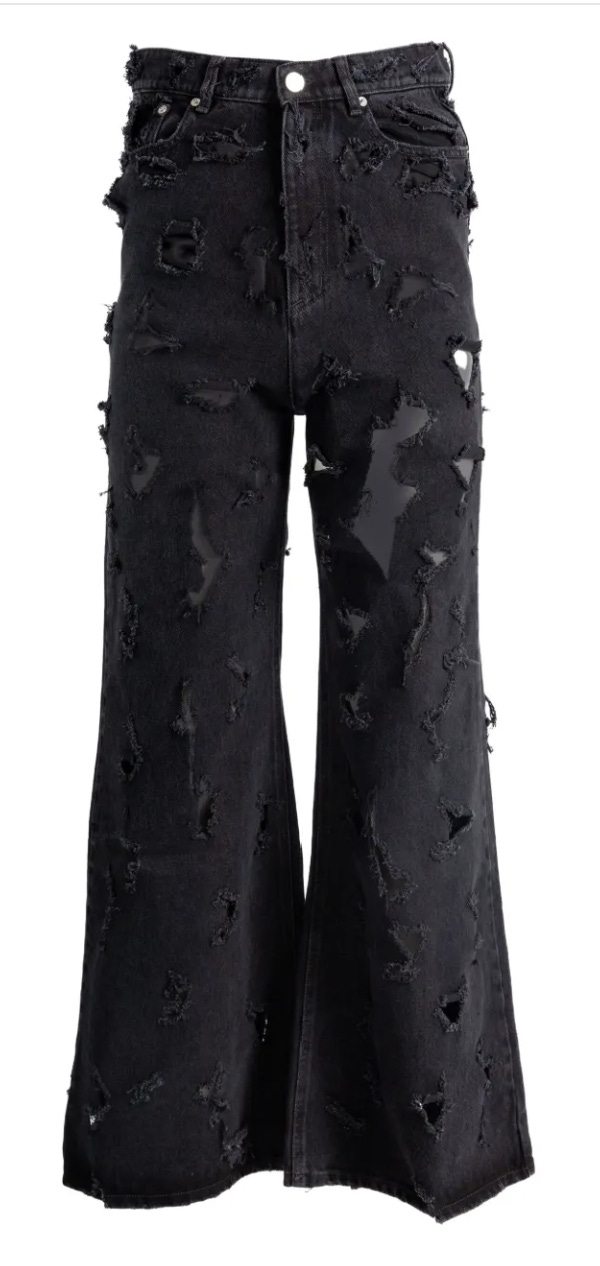
You’re free to judge the creations (and pricetags) of these brands for yourself. My job, as usual, is to judge their names, as well as those of other brands that have chosen a direction that plunges past edginess into the abyss.
“A nihilistic luxury brand”
Depression? Shit? With some brands, the misery is the point.
Here’s Steven Raj Bhaskaran, a co-founder of Matières Fécales, in a story published in AnOther magazine in October 2025: “It literally means ‘shit’,” Bhaskaran said of the name, “but for us, the concept has always been duality. To make that work, the clothes have to be well made — that’s the only way a name like ours makes sense in a luxury space.”
ERD’s co-founder, Jean Claude, who styles his own name as JEĀN CLĀUDE, claims credit for the brand name. He wrote on Instagram in July 2025: “I’ll never forget the night I named the brand. Henry [Levy] was ranting about [the Swiss boarding school] Le Rosey & I told him it sounded like a boarding school for Depressed Rich Kids. The name immediately stuck.” Co-founder Levy told The Guardian in 2016: “The name is essential [sic] a description of myself and my upbringing. I wanted to create a nihilistic luxury brand.”
Once you start looking, you see the trend everywhere. “This is what it looks like when nothing matters,” wrote Charlie Warzel in The Atlantic last month (gift link):
A kind of post-ironic fatalism that was once endemic to seedy message boards has bled into the broader culture, changing how people communicate. Nihilism is now the lingua franca of the internet. . . . The 4chan logic that turned even the most hideous news and ideas into empty entertainment pervades everything on the internet now—more proof that lol, nothing matters.
Nothing to wear
You don’t have to pay couture prices to get in on the nothingness trend. A wordmark-stamped T-shirt from Manchester (UK) brand Good for Nothing will set you back just US$39.
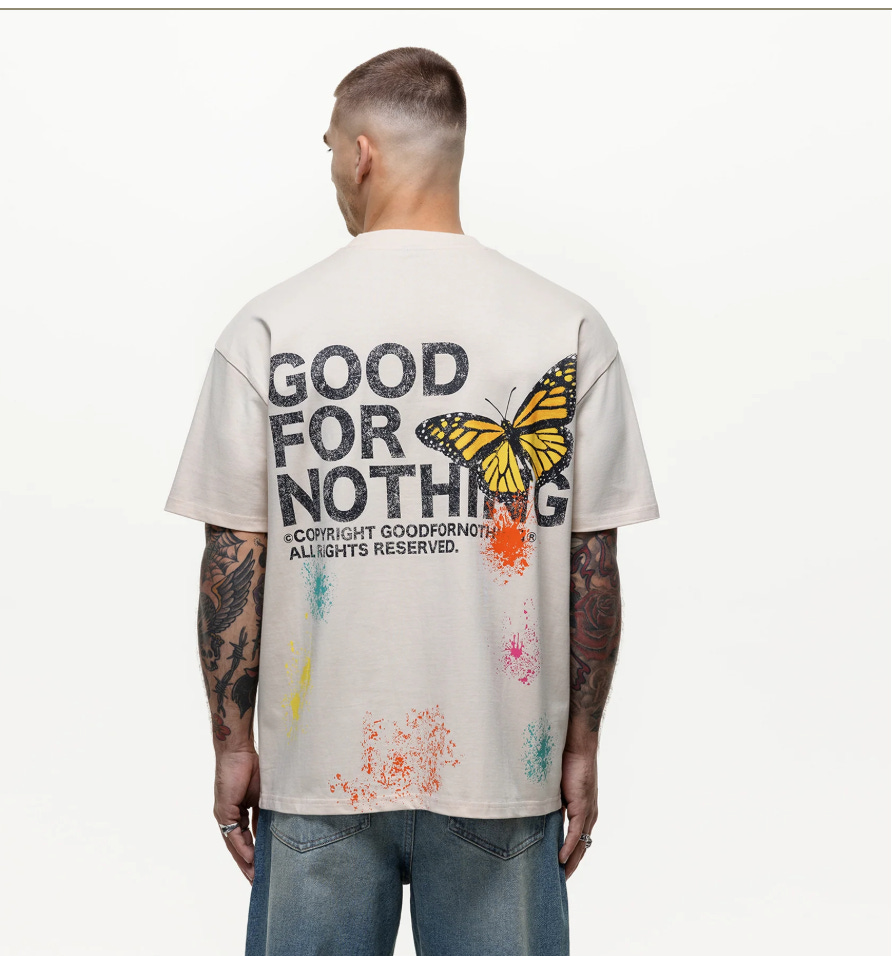
From the GfN website:
Good For Nothing embodies a rebellious spirit that challenges conventional norms. We separate those who embrace a lifestyle of authenticity over social expectations.
Good For Nothing isn’t just a brand, it’s a bold statement of empowerment, inspiring wearers to embrace individuality and reject traditional measures of success or worth.
The butterfly is a signature that runs through the DNA of the brand which represents the journey of self-discovery, transformation and good fortune.1
Good for Nothing is in good company, nothing-wise. Occasionally the negative word is turned into a positive. Witness:
With Nothing Underneath, a women’s shirt company founded in London in 2017. The name comes from the founder’s mission statement — “To be worn effortlessly, without thought or anything underneath” — and often appears as WNU. The brand is adored by many of the fashion Substackers I follow.
Nothings Something, a Stockholm-based brand of “elevated” menswear. (Ah, our old friend “elevated.”) The credo: “We exist to celebrate, facilitate and inspire the culturally astute ‘scholar-athlete’.” I found no explanation for the curious name (or its absence of punctuation), which the brand likes to style as NOSO. “Scholar-athlete” is a distinctly American category, which may explain the scare quotes.

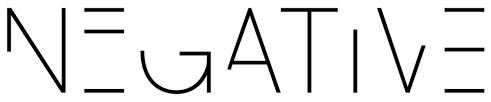
Negative underwear accentuates what’s missing: “We focused on what’s important: fit, comfort, and style — and ditched the rest.”
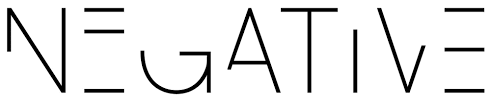
They also ditched this interesting wordmark for a much blander one.
Nothing to see here
Nothing Technology Limited, founded in London in 2020, makes phones, audio products, and related software. They claim to be “building a world where tech is fun again”— if “nothing” is your idea is fun. The products run on NothingOS. Why Nothing? Maybe because of the stripped-down aesthetic, maybe just to be contrary. I couldn’t find a name story anywhere.
Nothing to eat
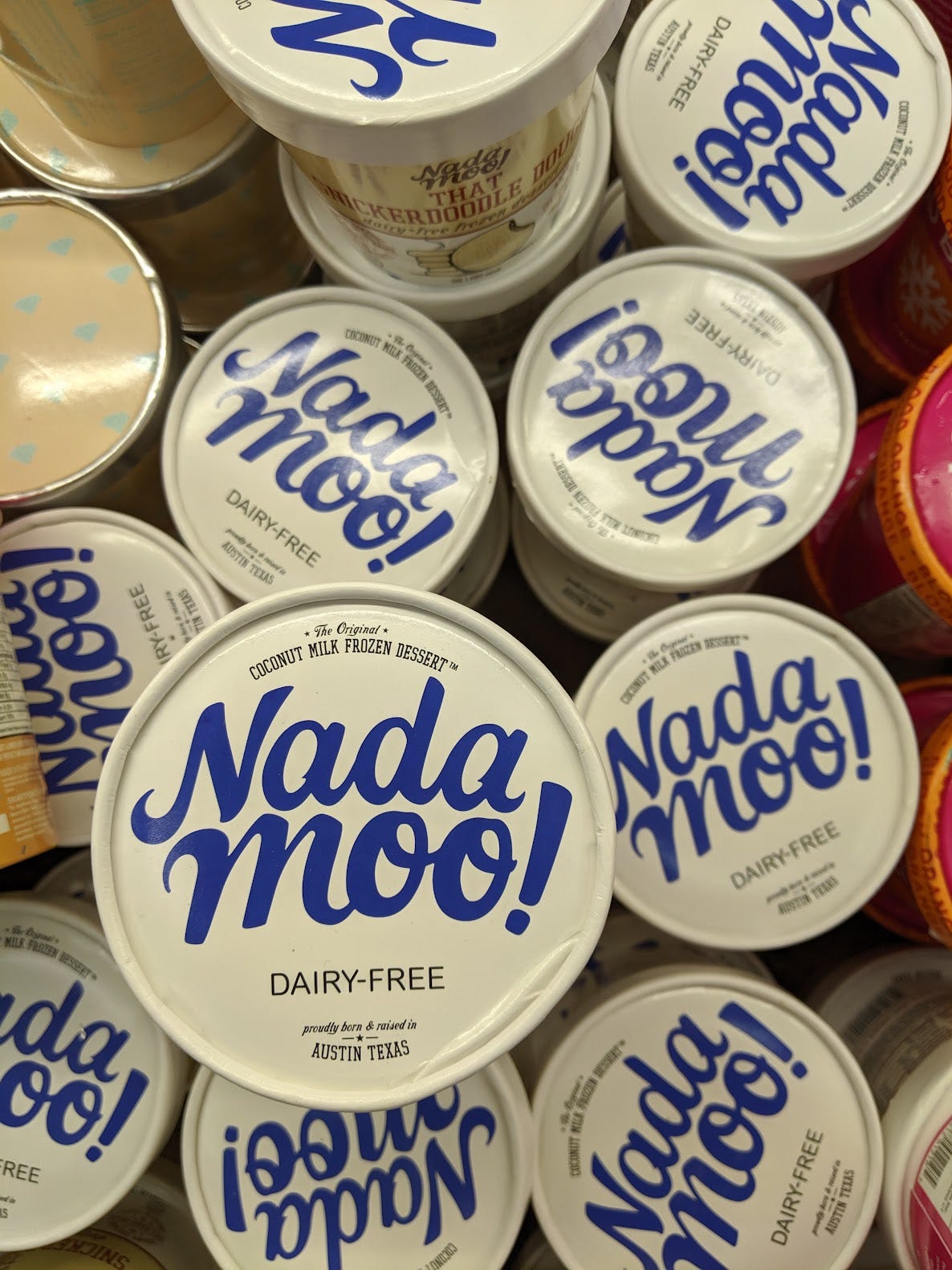
A meat or dairy substitute? An alcohol-free party beverage? Just add a negative word to your name — NadaMoo!, TuNO — to tell the world what you’re not.
My favorite nothingness-name in this category is Noughty — a homophone of “naughty” — makers of “the world’s first premium non-alcoholic wine portfolio.” Its URL is noughtyaf.com, and of course the AF stands for “alcohol free.” Sure it does.2

Nothing adjacent
You don’t have to be explicit about nothingness to get the non-message across. See, for instance:
Lack of Color, which makes “hats reimagined,” some of which are colorful. I can’t explain the name: Maybe in the brand’s beginnings all of the products were made of undyed fibers? Maybe they’re also “reimagining” the words “lack” and “color”?
Intentionally Blank is “a human-forward, queer-owned lifestyle brand creating pieces to fill the blanks in your personal style.” It’s based in Los Angeles, styles its name as “Intentionally _____” and leans into irony, or something, with its “Shoes for Your Feet” tagline.
Sold Out, a New York brand of “IMPECCABLY tailored, SUPERIOR quality, WARDROBE ESSENTIALS,” doesn’t explain its name, which could be interpreted as “selling out” (compromising one’s values for money) or “no longer available.” Either way, it’s hard for me to find an upside.
And all those “Un-” names and titles that I’ve been yapping about for quite a while now.
Making something of nothing: a summing-up
Defining your brand by what it isn’t can make it look rebellious, pugnacious, independent. The tactic worked for Pepsi 7-Up — the UnCola — in the 1970s. It works for “reality”-show contestants who insist that they’re “not here to make friends.” (They’re here to win, dammit.) And in a culture of overconsumption, a brand with “nothing,” “negative,” or even “fecal matter” in its name can seem lean as well as mean: stripped down to essentials.
But negativity can also come across as posturing: all antithesis, no thesis; all rejection, no embrace. When your selling point is nothingness, it’s a challenge to offer satisfaction and fulfillment. And when everyone’s doing it, negativity is just a hollow performance — and a bore.
"To make that work, the clothes have to be well made — that’s the only way a name like ours makes sense in a luxury space."
-->
"With a name like Smucker's, it has to be good"
Great column! Not for nothing you’re the best writer on this stuff!
It’s funny, one of the first words I learned in Swedish was “ingenting” which means “nothing” but I always felt it sounded like something (but that word is “någeting” or “nåt” which definitely sounds like no or nothing!)
And when I taught English, sometimes I’d stop correcting double negatives bec it almost sounded clearer.
If an Italian student said,
“I don’t want nothing”, I’d think… ok!