
Naming briefs #18
A fruity perfume, a fruity beverage: Reviews of Miutine and Chinola.

Welcome back to Naming Briefs, a regular feature in which I scrutinize and analyze notable corporate or product names. This is the eighteenth installment of Naming Briefs; here’s Naming Briefs #17 (Dreamforce edition!), which includes a link for tunneling back to previous installments.
Here’s some background on the series.
Want to know more about me and my work? Read the intro to Naming Briefs #13.
Miutine
Thanks to Wordnik founder Erin McKean for alerting me to Miutine, the “new, irreverent fragrance from Miu Miu.” (The quote is from the press release, not Erin.)
“I thought this was interesting,” Erin wrote in an email. “The new Miu Miu perfume is based on a French word (supposedly) and they’re advertising it with fake (English) dictionary entries.”
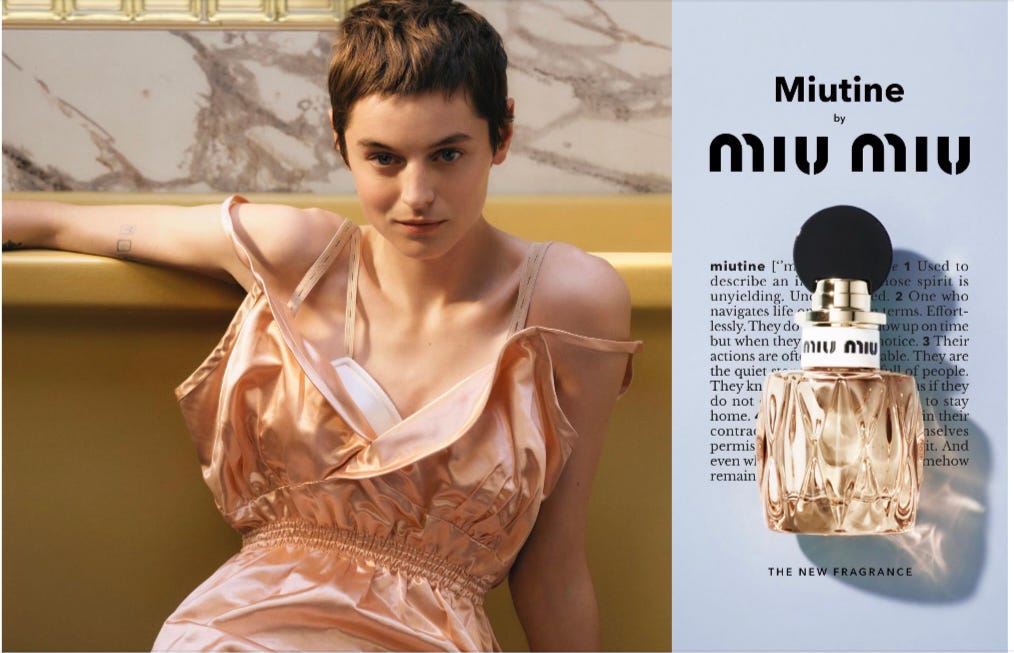
Erin knows I’m always on the alert for what I call Branding by Definition: the lazy use of (often fake) dictionary text in advertising. And here was a bilingual BBD! I inhaled deeply and got to work.
Miutine was introduced in August 2025, joining two other Miu Miu fragrances, L’Eau Bleue and Eau de Muguet, whose names are more descriptive and less “irreverent.” Miutine is, to use an adjective Erin herself coined, a madeupical word: a portmanteau of Miu Miu — Prada head designer Miuccia Prada’s nickname, and the name of a Prada subsidiary founded in 1992 — and mutine, an archaic French word meaning “rebel” or “mutineer.” The press release explains it thus:
The name: Miutine
Miutine. A mischievous, Miu Miu twist on the French ‘mutine’, a rebel’s spirit, bottled. The spirit of the Miu Miu girl: irreverent. She knows the rules and enjoys twisting them. Miutine is not a statement, but a knowing glance. A sweet rebellion, light-hearted and laced with wit, a gesture made for oneself.
And the fragrance?
Miutine is a gourmet cheekiness rendered in fragrance. Inspired by a timeless classic of women’s perfumery - the Chypre family - Miutine is characterized by a sophisticated blend of bright citrus, a floral heart, and a rich, earthy base of oakmoss and patchouli. This iconic chypre structure is subverted by an explosive duo of wild strawberry and brown sugar accords, possessing a chypre signature, gourmand, intimate, and enveloping.
People who know perfume know exactly what all that means. I’m still stuck on “gourmet cheekiness.”
It’s hard, maybe by intention, to read the “dictionary text” in the ad, which features the British actor Emma Corrin. In a video on the website the text flashes by so quickly I couldn’t get a screen cap. (What does that say about its significance?) But I was able to glean this much:
The “entry” classifies miutine as an adjective . . . and then defines it as a noun (“One who navigates life on their own terms. Effortlessly.”).1
The rest of the “entry” looks like it comes from a dictionary but sallies forth with meandering musings: “Their actions are often . . .” “They are . . .” “They know . . .” Who is they?
Why bother to create all this pap if you’re just going to cover it up?
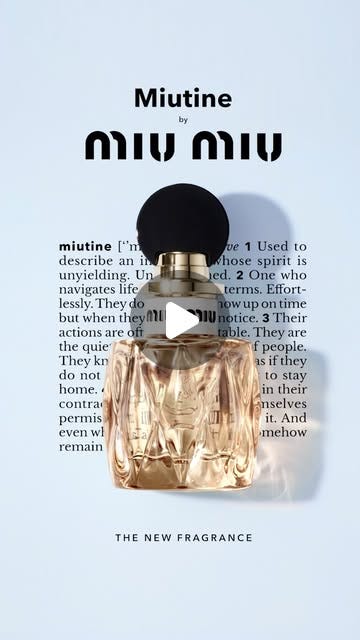
I expect most of Miutine’s target audience won’t care, or notice, the anomalies. (The perfume’s all about twisting the rules!) I, however, find it pretentious and annoying.
And even counterproductive. When I originally wrote about the BBD trend, back in 2013, I interviewed an actual lexicographer, Kory Stamper, to get her take. Here’s what she told me:
“I have to confess that to a lexicographer, these are the least effective ads in the world,” she told me via e-mail. But the biggest problem with ads-by-definition, she said, “is that the mystique of the dictionary ends up butting up against the reality of the dictionary. The mystique says that dictionary definitions convey authority, that they get you to think about what something really is, and they are therefore perfect vehicles for conveying the essential nature or mission of a company. But the reality is that most people expect dictionary definitions to be boring, which is the last thing that any advertiser wants their ad to be. Dictionary definitions are not supposed to be arresting or sexy.”
Chinola
Speaking of fruity gourmet cheekiness, I spotted a bottle of Chinola, with a C, in a very hospitable Oakland jewelry shop and paused to admire the graphics on the label and to wonder about the origin of the name.
(If you read this name as Shinola, you’re not alone. Read my post about Shinola-with-an-S.2)
()
It’s a brand of fruit liqueur produced in the Dominican Republic.
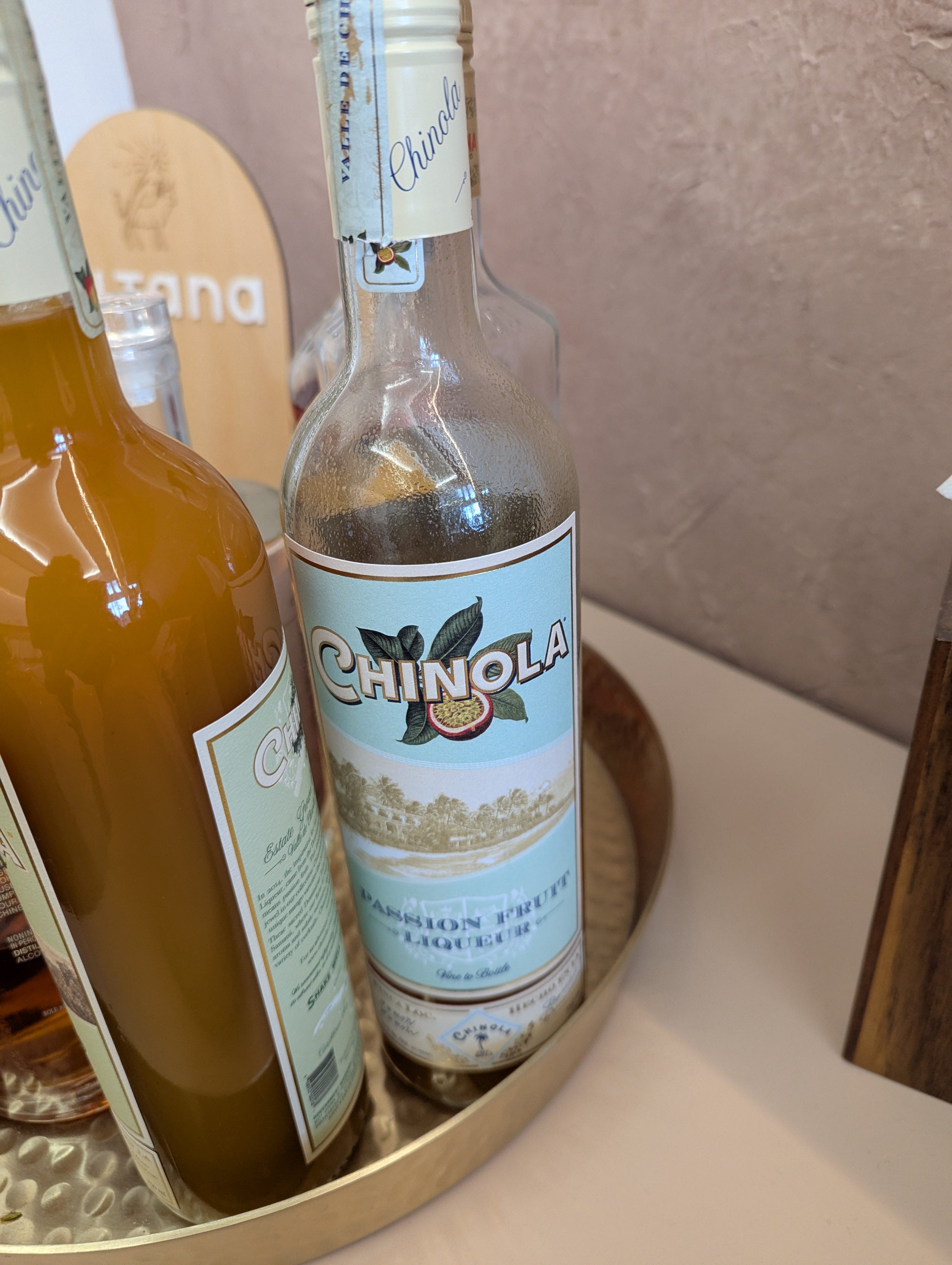
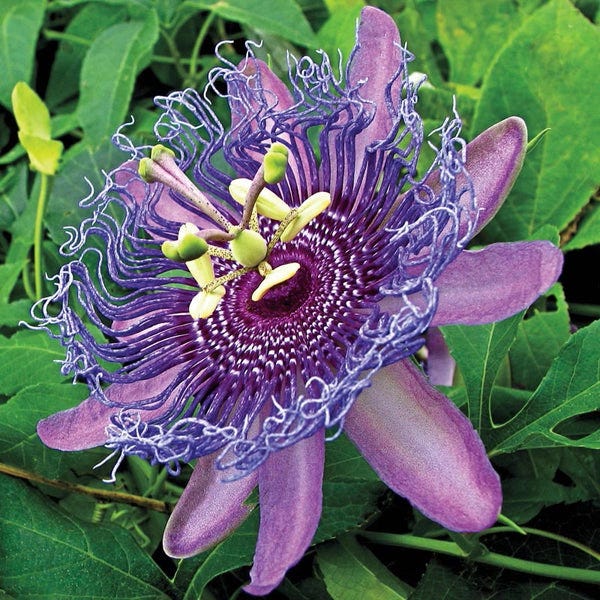
My research revealed that chinola — chee-NOH-lah — translates to “passion-fruit” (Latin name: Passiflora edulis) in the Spanish dialect spoken in the Dominican Republic.3 That’s the passion-fruit itself depicted on the label; it takes 100 of the little egg-shaped fruits to produce one liter of juice.
The Chinola company was founded in 2014 by Andrew Merinoff, an American with family roots in the spirits industry, and his business partners. It’s headquartered in Miami; production takes place in the Dominican Republic. And although the brand name means “passion fruit,” the company has branched out into pineapple and mango liqueurs.
I find the name appealing: meaningful yet a little mysterious, connected to a specific place yet globally accessible. It has sonic echoes of other brands in its category — the vermouth brand Cinzano (chin-ZAH-no), the artichoke liqueur Cynar (chee-NAR), both from Italy — but not enough to cause confusion. In fact, the name may operate — to people outside the Dominican Republic, anyway — as an empty vessel, pleasant sounding yet void of specifics.
I just wish the company had paid closer attention to the copy on its website, which had me reaching for my imaginary red pen to correct the danglers and verbosity. For example:
After discovering the magic of the sacred Dominican passion fruit, Chinola® ‘s journey began in 2014 with the creation of the world’s first vine to bottle fresh fruit liqueur that’s shelf-stable. Chinola was born from a creative collaboration of hospitality experts, spirit industry professionals, and a multi-generational master blender. Locally referred to as chinola (chee-noh-lah), our dream was to create an old-world style liqueur that embodied the taste and aroma of fresh passion fruit.
Who discovered the “magic of the sacred Dominican passion fruit”? Not the “journey,”4 which is the subject of that sentence. What is locally referred to as chinola? Not “our dream,” the subject of that sentence.
And how hard would it have been to fix the apostrophe in the first sentence?
It’s enough to drive a person to drink.
The Spanish- and Portuguese-speaking worlds have a lot of names for passion-fruit: parcha (Puerto Rico), parchita (Venezuela), granadilla (Ecuador, Costa Rica), fruta de la pasión (Spain), curuba (Colombia), maracuyá (Mexico), maracujá (Brazil) — the last two are Hispanicized from indigenous Tupi mara kuya, “food that serves itself.” The plant is native to the Americas and is now grown in many suptropical regions. “Passion” in the name isn’t erotic but rather a reference to “the Passion of Jesus,” because early Christian missionaries saw the various parts of the passion-flower as representing symbols associated with Jesus’ crucifixion. More info here.
Ennui (noun) -- A French word that rhymes with "free," not "eye," describing the almost painful condition that follows contact with indistinguishable perfume ads, particularly those using vaguely French product names to suggest some sort of expertise and showing a bit of the old skin to suggest the rumpy-pumpy that will inevitably follow use of the product.
“'Their actions are often . . .' 'They are . . .' 'They know . . .' Who is they?"
I checked Wikipedia for British actor Emma Corrin (certainly not because I thought she was beautiful and waif-like.) A footnote in the article says, "Corrin is non-binary and uses they/them pronouns. They prefer the term actor to actress." And indeed, throughout the article, Wikipedia references Corrin as "they."
Could this be the "they" they're referring to?