

August linkstack
Political language, Olympics naming, generational naming, a new word game, and more.

Greetings to new subscribers and followers, and welcome back to the linkstack, a monthly roundup of news about words, brands, and the language of commerce — and whatever else strikes my fancy — from Substack and beyond. Here’s the July linkstack, where you’ll find a wormhole to previous installments.
If you’re reading this as an email, tap or click on the headline for the complete experience. If you like what you see, please let me know by tapping the little heart icon. (Or buy me a coffee!) If you feel motivated, let me know in the comments what you’d like to see in next month’s linkstack.
Want more Fritinancy? Follow me on Bluesky, Instagram, and LinkedIn.
A pre-obituary
Back in June I told you about Oldster Magazine’s Q&A with my friend Jon Carroll, the veteran San Francisco Chronicle columnist and magazine editor. (If you missed it, it’s here.) Jon is losing his eyesight to macular degeneration, so I volunteered to help him write, edit, and publish the questionnaire. It worked out so well that Jon — who had suspended his blog1 in 2018, when he got his diagnosis — decided to flex his writing muscles again, with me once again serving as amanuensis. Oldster editor Sari Botton was obliging, so Jon and I got to work on what Jon calls a “pre-obituary” for his wife, the writer and photographer Tracy Johnston, who has metastatic breast cancer. It was published Monday; I hope you’ll read it:

RIP Typepad
I began blogging in 2006 on the almost-new platform Typepad. Even after I started publishing on Substack I continued to pay $50 a year and post occasionally over there. Yesterday, Typepad informed all of its customers that it would be shutting down on September 30, 2025, meaning all of us had one month to export our blog content — in my case, more than 3,400 posts — or lose it forever. I’m torn between pointless grief, useless fury, and teeth-grinding frustration. So far my attempt to export my files have been fruitless. (As in: Nothing happens.) I’m open to suggestions and assistance. (I’ll pay a fair rate.) Meanwhile, I can’t say I didn’t see it coming. Here’s a story I wrote about web death in 2023: The World Wide Web Is Turning 30. It’s Also Dying, One Link at a Time (gift link).
Book of the month
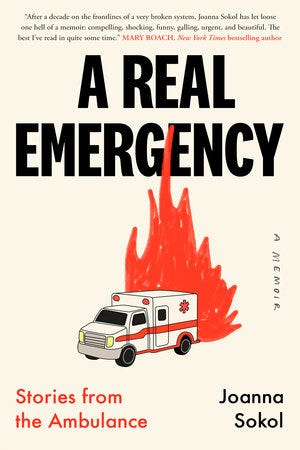
A Real Emergency: Stories from the Ambulance is a chronicle of Joanna Sokol’s fifteen years as an EMT (emergency medical technician) and paramedic in Reno, Santa Cruz, and San Francisco. But A Real Emergency is more than a memoir: It’s a history of ambulance services in the U.S. (did you know that the first American EMTs were a group of Black men who formed the Freedom House Ambulance Service in Pittsburgh, in 1969?); an investigation into the amorphous, ever-expanding role of ambulance workers (social work, overdose intervention, geriatric care, and more); and an indictment of the shocking conditions under which many emergency personnel labor. It’s a terrific read, and the audio version — narrated by Sokol with support from voice actors — will keep you wide awake and gripping the steering wheel on a long drive.
Read a Q&A with Joanna Sokol. Read archive version (no paywall),
Politics and the English language
“Want to win an election? Try one of these eight words.” — Yello by Hunter Schwarz
“Satirizing Trump in this way, by essentially holding up a mirror, serves the express purpose of startling people out of their desensitization. It works, and is working, on two levels: First, by demonstrating that Trump can be effectively mocked. Second by exposing the inconsistency or bad faith of everyone who’s given Trump a pass.” — Brian Beutler on what California Governor Gavin Newsom — someone about whom I have decidedly mixed feelings — is doing right.
Is language holding Democrats back from breaking through with voters? — Adam Wren and Dasha Burns for Politico (audio and text)
Talking the talk
“Etymology nerd” Adam Aleksic, whose book Algospeak: How Social Media Is Transforming the Future of Language I’m currently reading, recently published two op-eds about language use. For the New York Times, he wrote about “the insidious creep of Trump’s speaking style”; for the Washington Post he tackled the unnerving trend of people “starting to talk like ChatGPT.” (Both links are gifts.) For his own newsletter, Aleksic wrote about the connection between the two op-eds.
Branding the Olympic venues
The 2028 Olympic Games in Los Angeles will be the first in history to sell naming rights to venues. Alissa Walker, who’s been covering the progress of LA28 in her Torched newsletter (excellent name!), thinks it may not be such a terrible idea, although “holding diving in the Palantir Pool will really give the sport a whole new meaning.”
Branding the generations
“Mostly, the current generational labels are just lazy thinking”: Douglas Giles, who writes the Insert Philosophy Here newsletter, on why we should stop talking about GenX, GenZ, and Millennials. Boomers? Eh, OK. Part 1, Part 2.
I wrote about generation-branding in 2020: “(Talkin’ ’Bout) the Generations.”
Going crackers
I have nothing new to say about the on-again, off-again Cracker Barrel logo change — as of this writing, it’s back to the fussy, faux-old-timey design after a lot of white folks (including the White Folk in the White House) got all huffy about “wokeness” and “heritage.” I’m just here to let you know that the gent in the old logo has a name: Uncle Herschel. He was a real person, the uncle of company founder Dan Evins. Also, the restaurant chain was founded in 1969, which is about as “heritage” as Midnight Cowboy. As usual, Brent Terhune, the faux-redneck comedian, had the best take. And the best follow-up take.
Slate’s new word game, Pears
Pears “engages two different gameplay muscles—the find-every-word completist muscle of something like Spelling Bee, but also the mull-it-over, find-the-best-word muscle of Scrabble,” according to the game’s creator, Dan Kois. Kois originally called the game “Digraph,” the word for “two-letter combos that create a discrete sound,” but eventually chose Pears because it was “more cute and less wonky.” I confess I’m addicted, not least because unlike, say, Wordle or Spelling Bee, PEARS allows a lot of current slang as well as so-called “naughty words.” (Two of the longest words in yesterday’s game were RATFUCKS and SKULLFUCKS.) Read an interview with Dan Kois; play Pears.
Zipper-di-doo-dah
The latest episode of Articles Of Interest is all about zippers, and it’s a pip. I hadn’t known that the first modern zipper was called the Hookless Hooker.
Interview with a naming virtuoso
My colleague Anthony Shore spoke with Firebrand Marketing about naming trends, “productive friction,” and the impact of AI on naming. One trend Anthony approves of: “cliffhanger names,” the label he gives to names that are abruptly truncated, compelling you to mentally fill in the blank. Examples include the clothing and footwear brand OF ORIGIN (which has a cool domain extension, .ooo) and Jony Ive’s design collective LOVE FROM.
The conversation got me thinking about other cliffhangers. Here are two:
AI yes?
AI audio for Google Docs sounds like (ha) a pretty good tool for writers — listening to your work is the best way to catch errors and disfluencies. And I’ll definitely listen to anything recommended by Mignon Fogarty, aka Grammar Girl, in her AI Sidequest newsletter. How to Use AI Audio in Google Docs.
AI no?
“Three years into the hype, it seems that one of AI’s enduring cultural impacts is to make people feel like they’re losing it.” AI Is a Mass-Delusion Event: Charlie Warzel for The Atlantic (gift link)
AI maybe?
“If I’ve learned one bitter lesson about this stuff over the years, it’s that the best productivity hack in the world is simply liking your job. If you enjoy what you do, you will find ways to do it, and in 2025 almost any software remotely suited to the purpose will be more than good enough.” Casey Newton on productivity: what AI is surprisingly good for (identifying sources for articles), what it’s bad at (“AI is no kind of business model for journalism”), and how a tool like Notion can streamline research and analysis.
Copy that
“Much of modern copywriting falls into one of two categories: embarrassingly lazy, or farcical and nonsensical. But a closer reading reveals something sad: companies barely have the confidence to market their own products.” — Catherine Shannon, “I think copywriting is trying to kill me.” (Hat tip: W. Michael Johnson)
All joshing aside
It’s the golden age of “Josh”: “Three of the nation’s 50 governor’s mansions are currently occupied by Jewish men named Josh — and while Josh trails only Mike as the most common gubernatorial name, the Joshes could soon be joined by namesakes in Wisconsin and Guam, bolting into the lead.” (NBC News)
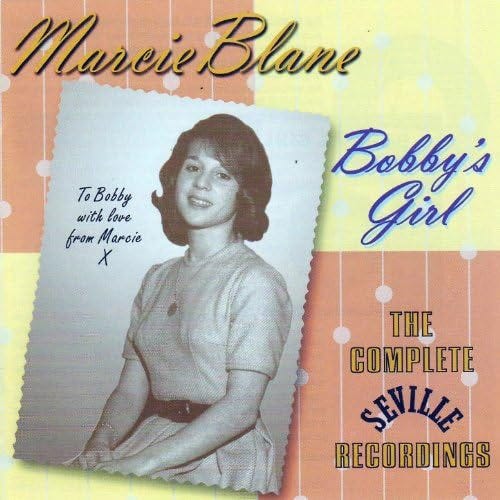
What about Bobby?
Why were so many 1960s teen heartthrobs named Bobby? NPR’s Bob Mondello — a Bobby himself in his youth — investigates.
Jon’s blog appears to have been hacked or infected with malware. If anyone reading this would like to help me sort out the ensuing mess, send me an email or DM.
So much good stuff. Extra thanks for link to Carroll's pre-obit.
Thank you for facilitating Jon Carroll’s contributions to Oldster Magazine, Nancy!! 🙏🏻💝