
The Fourth
Some reasons to celebrate.

Earlier this week I published a few dyspeptic takes on the United States’ semiquincentennial (“Our Tacky 250th”). Here, as promised, are readings from an alternative perspective: if not quite starry-eyed then at least moderately hopeful and resolutely anti-tacky.
Greil Marcus is one of America’s great cultural critics. He’s best known for his music writing — see his Substack, “Letter in the Ether” — but he has also published a strange and wonderful book about patriotism and The Great Gatsby. Just 154 pages long, Under the Red White and Blue covers a lot of territory: the U.S. Bicentennial, in 1976; The Sopranos; Jelly Roll Morton; Moby-Dick; a close reading of Gatsby and its multiple film adaptations. The title is repurposed: F. Scott Fitzgerald had favored Under the Red White and Blue for his 1925 novel. (He was also partial to Trimalchio in West Egg.) Fitzgerald told his editor, Maxwell Perkins, that he thought The Great Gatsby was a “weak” title.
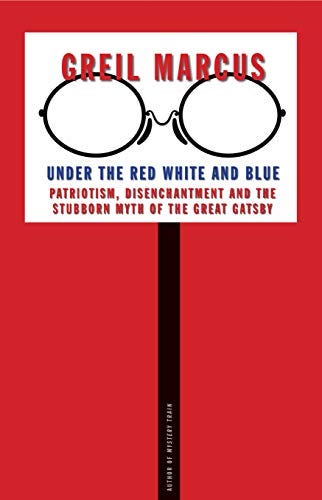
Here’s an excerpt from Marcus’s book:
There’s a way in which you can see every American story as a version of the Declaration of Independence: every story an attempt to make it true, or prove it a lie. In 1941, Henry Luce called the twentieth century “The American Century”: he meant that was the century when America became a colossus from which the rest of the world would have to step back, trembling with awe. But if that American century was truly American, you can almost hear Lincoln reminding us — or, if not Lincoln, the doorkeeper at Independence Hall—then the story of the American century is the story of all sorts of previously excluded, marginalized, scorned, despised, ignored, or enslaved people — laborers, women, African-Americans, Asian-Americans, Jews, Latinos, gay men and women — entering into full citizenship and a full participation in national life. If not full citizenship, a more complete citizenship than even Lincoln or the doorkeeper could have imagined — as, again and again, decade after decade, those words from the Declaration of Independence sounded as if for the first time.
Last week I went to an event at Clio’s Books here in Oakland to celebrate the publication of How We See It: The World Looks at America in the Age of Trump,. an anthology of essays by the far-flung contributors to The Dial, an online magazine featuring the voices of reporters from some 85 countries.1 Do you wonder what journalists in Turkey, Argentina, Taiwan, Palestine, and Cuba — and more — think about the U.S. these days? Read this book.
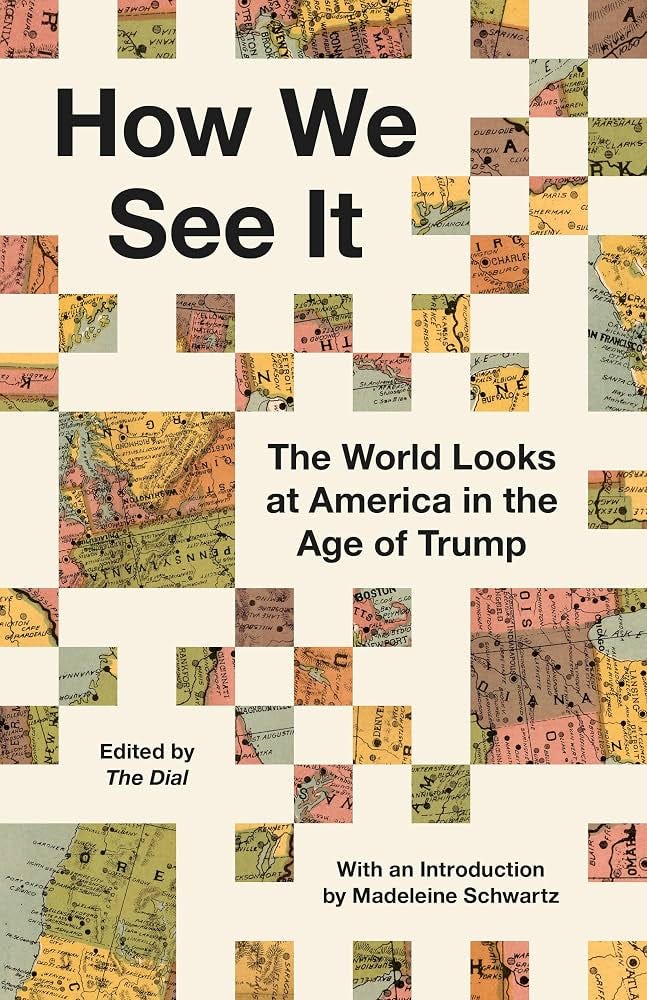
From the introduction by The Dial’s founder and editor, Madeleine Schwartz:
Working with our writers has taught us that there’s nothing exceptional about what’s happening in the United States, except that so many Americans continue to cling to the idea of their own specialness. What is happening today in America is part of a global political turn, one in which social disputes fester rather than move toward resolution. Inequality, ineffective politics, and social divisions create the conditions for authoritarianism in the United States as they do in other parts of the world; the difference is how little the American people seem to see the political situation we’re now in. Now when I conduct my interviews across Europe, I’m still almost always asked bout what is happening in the United States. The number one question is “How can Americans be letting this happen?”
What a gift from historian Heather Cox Richardson and company: 250 to 250, a series of 250 one-minute films about “the many people, places, and events that have built our country and remind us of the power of each person to make history.” The series is a throwback to the Bicentennial Minutes that were broadcast on the CBS television network between July 1974 and December 1976. Watch 250 to 250 on Substack, YouTube, Facebook, and other platforms.
One of my favorites:
What are we celebrating? The New York Times asked sixteen opinion columnists and writers to submit “nominations for America’s highlight reel.” (Gift link)
From writer and sociologist Tressie McMillan Cottom m on public libraries:
Where but the library, I frequently ask my students, can you linger without buying something first? There are apps to find a bathroom that won’t cost a cup of coffee first. Drugstores lock up baby formula. The grocery store requires a cellphone number for a discount on pork chops. Everywhere else in our fragmented worlds, we are reduced to transactions. Meanwhile, the library will hand you a stack of books, a carpet cleaner and a stack of seeds without collateral. Public libraries are tangible proof of an inalienable truth that we have forgotten in our 250 years: Some things are more important than profit.
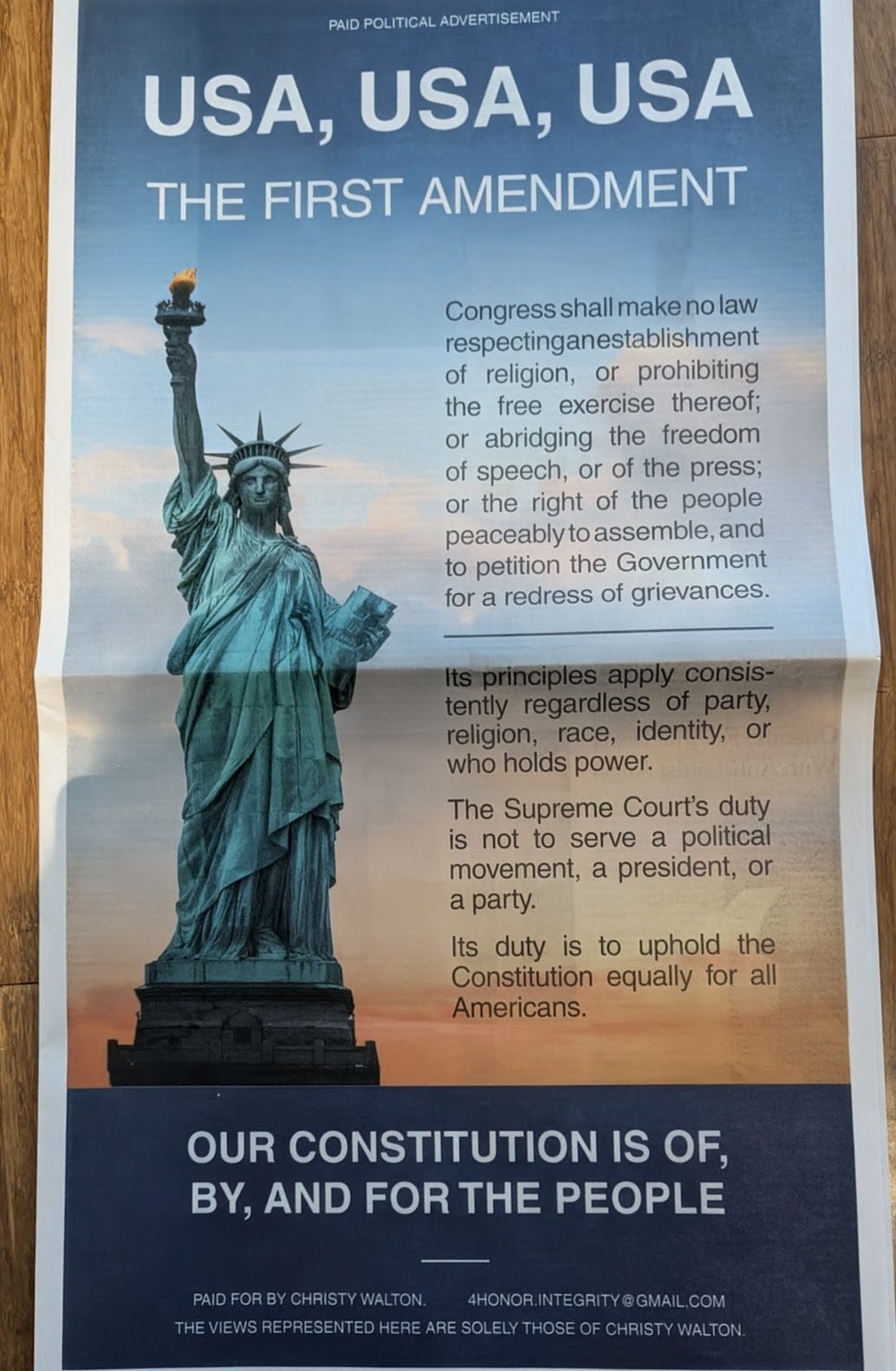
And speaking of profit: From Christy Walton, an heir to the Walmart fortune, this full-page ad, published in The New York Times on June 21, 2026. “The Supreme Court’s duty,” it reads in part, “is not to serve a political movement, a president, or a party. Its duty is to uphold the Constitution equally for all Americans.”
This is the fourth incarnation of an American Dial. The first, which was published from 1840 to 1844, was the chief publication of the Transcendentalists; its editor was Margaret Fuller, who had been selected by the chief Transcendentalist himself, Ralph Waldo Emerson.
I am fascinated by the Walton family, which is the richest in the world. Instead of buying a page in the New York Times, Christie could have bought the New York Times. And from the looks of this ad, I wish she would.
The Waltons are richer than the Saud family—the one that owns Arabia and all that oil. They own far more than half of the American people do, combined. And it all comes from freakin' Walmart, which smells funny. I mean that in a literal sense, but I guess there are several ways that could be taken. Hundreds of billions of dollars in the hands of a dozen or so people.
We say, "No kings," and we're thinking of Cheetolini with his pathetic maneuvers, but he and his wretched family would have to increase their wealth a hundred times before they would be invited to go stand on the lawn outside the Waltons' place. We're always looking in the wrong direction.