
Let there be mottos!
Lots of lux, graduates.

It’s graduation season at colleges and universities around the world, and while I’m neither participating nor spectating this year, I can’t escape the crowds of commencement celebrants and their well-wishers here in the collegeful Bay Area.1 And so my thoughts have been turning to the things institutions of higher learning say about themselves. In short: college mottos.
Here are some of the commonest, the weirdest, and the most extremely local college mottos I’ve been able to find.
[This is a long post! Click on the headline to read it in your browser, or switch to the Substack app.]
The usual suspects
Go to the Wikipedia page that lists college and university mottos and you’ll find plenty of Latin and Greek and lots of light and truth. There’s more than one Fiat Lux, which happens to be the motto of my own alma mater, which now presents it mostly in English translation (“Let There Be Light,” from Genesis 1:3). There’s the can’t-argue-with-it Sol Lucet Omnibus (“The sun shines over everyone”) from Lusiada University in Lisbon. There’s venerable Harvard’s Veritas (“Truth”); Yale’s Lux et Veritas (“Light and Truth”); Howard University’s Veritas et Utilitas (“Truth and Service”); and the University of Łódź’s Veritas et Libertas (“Truth and Freedom”), to cite just a handful of truthy examples.
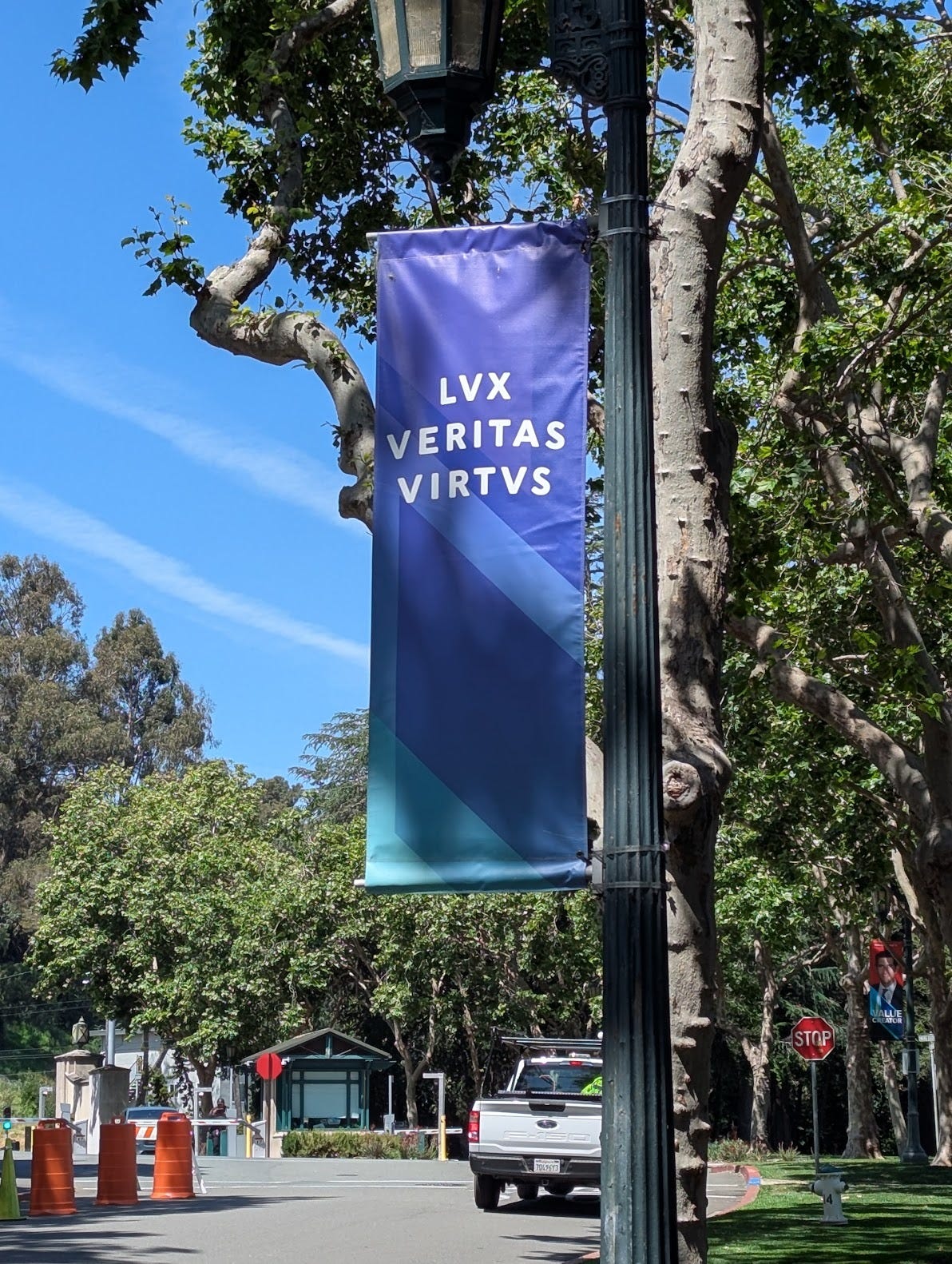
Closer to home, Northeastern University Oakland, which occupies the Mills College campus — the East Coast institution swooped in to save little Mills in 2022 — boasts of Lux Veritas Virtus: “Light, Truth, Virtue.” Mills had been founded in 1871 as Young Ladies Seminary, the first women’s college west of the Rockies; its original motto was Una destinatio, viae diversae, Latin for “One Destination, Many Paths,” a worthy if harder-to-pronounce sentiment.
But enough banalities. Let’s look at some of the cleverer, cheekier, and more-arcane university mottos from around the world.
Local languages
Gwirionedd Undod A Chytgord: Cardiff University’s Welsh motto translates to “Truth, unity, and harmony.”
Eman Ta Zabal Zazu: The incantatory motto of Universidad del Pais Vasco, which is in Spain but not quite of Spain. The Euskara (Basque-language) motto means “Give and spread it,” and no, I’m not sure what “it” is.
Мы не сделаем вас умнее, мы научим вас думать!: A rare honest motto from Novosibirsk State University. It translates to “We will not make you more intelligent, but we will teach you to think [more effectively]!”
Izay adala no toa an-drainy: The Malagasy-language motto of the University of Antananarivo in Madagascar. According to Wikipedia it means “Foolish is he who seeks only to match (or: emulate) his father,” which seems less like a motto and more like the moral to one of Aesop’s fables.
เป็นเลิศ เป็นธรรม ร่วมนำสังคม: The Thai-language motto for Thammasat University, in Bangkok. Wikipedia’s translation is “Be the finest, be the fairness [sic], be the main engine of society.” This may be out of date; the university’s English-language website gives the motto as “Excellence, Integrity, and Leadership in Society.” “Thammasat,” by the way, means “the study of law.”
Ma luna a’e o na lahui a pau ke ola o ke kanaka: The Hawaiian-language motto for the University of Hawaii system means “Above all nations is humanity.”
Quansem Ilep: “Always First” or “Always Ready,” the Secwépemc (First Nations) motto of Thompson Rivers University, in Kamloops, British Columbia. “Quansem Ilep” is also the motto of the British Columbia Dragoons, an armored reconnaissance regiment of the Canadian Army.
En Cha Huná: The motto of the University of Northern British Columbia, which has campuses throughout the province. The words in Dakelh (a First Nations language) translate variously to “Respecting All Forms of Life” and “Other People Have Their Point of View.” So reasonable, that second option!
Ko te tangata: “For the people” in Māori. It’s the motto of the University of Waikato, Hamilton, New Zealand.
Unexpected languages
Die Luft der Freiheit weht: Who knew—not I, that’s for sure—that Stanford University had a German motto? It means “The wind of freedom blows.” Yes, there’s a story behind that motto; Stanford’s former president, Gerhard Casper, told it at some length in a 1995 address.
Ephphata: As far as I can tell, only Gallaudet, the private university in Washington, DC, for the deaf and hard-of-hearing, has a motto in Aramaic, the language spoken in the Palestine of Jesus’ era. Ephphata means “Be opened, from the Christian Bible, Mark 7:34.
Coadyuvando El Presente, Formando El Porvenir: This Spanish-language motto wouldn’t be unusual at the University of Toledo, Spain, but it is in fact the motto of the University of Toledo, Ohio. The university translates it as “Guide to the Present, Moulder of the Future,” but coadyuvando is a participle, so the first word should be guiding. Nobody is quite sure why Toledo, Ohio, is called Toledo, but the most popular theory has nothing to do with Spain: “Willard J. Daniels, a merchant, who reportedly suggested Toledo because it ‘is easy to pronounce, is pleasant in sound, and there is no other city of that name on the American continent.” (Via Wikipedia)
Enthusiasm!
Surgite!: Brock University in St. Catharine’s, Ontario, urges you to “Push on!” in Latin.
Attempto!: The risk-embracing University of Tübingen, in Germany, shouts “I dare!”, also in Latin.
Vivere! Vincere! Creare!: Not to be outdone, the Latin motto of Kyiv’s National Aviation University has three imperatives: Live! Overcome! Create!
A brief digression on Chinese university mottos
Chinese mottos look compact in their native orthography, but — at least according to Wikipedia, which I’m relying on because I can’t read Chinese —the translations are maximal, and tend to sound as though they were lifted from Mao’s little red book or the I Ching. Here’s Fudan University: “Rich in knowledge and tenacious of purposes, inquiring with earnestness and reflecting with self-practice.” And Shanghai University: “The movement of heaven is full of power. Thus the superior man makes himself strong and untiring. Be concerned about the affairs of state before others, and enjoy comfort after others.” And this set of imperatives from Sun Yat-sen University: “Study Extensively, Enquire Accurately, Reflect Carefully, Discriminate Clearly, Practise Earnestly.” Is there anything left to say?
Old(er) English
And Gladly Teche: Macquarie University, in Sydney, Australia, takes its Middle English motto from Chaucer’s description of the Clerk — “And gladly wolde he lern, and gladly teche” — in the Prologue to the Canterbury Tales. The full line was once the motto of Illinois State University, in Normal, Illinois; in 1992 it was modernized to “Gladly we learn and teach.” The change pissed some people off for years.
Manners Makyth Man: This 14th-century saying is the motto of New College, Oxford, which despite its name is one of Oxford’s oldest colleges. Here’s a longish explanation of the phrase, which is attributed to William of Wykeham, New College’s founder.
Hazard Zet Forward: If you were on Jeopardy and had to name the U.S. university better known for its men’s basketball team than for its Anglo-Norman motto, what would be your guess? OK, I’ll give it to you: It’s Seton Hall, in South Orange, New Jersey, and the motto translates to “Despite hazards, move forward.”
Outliers
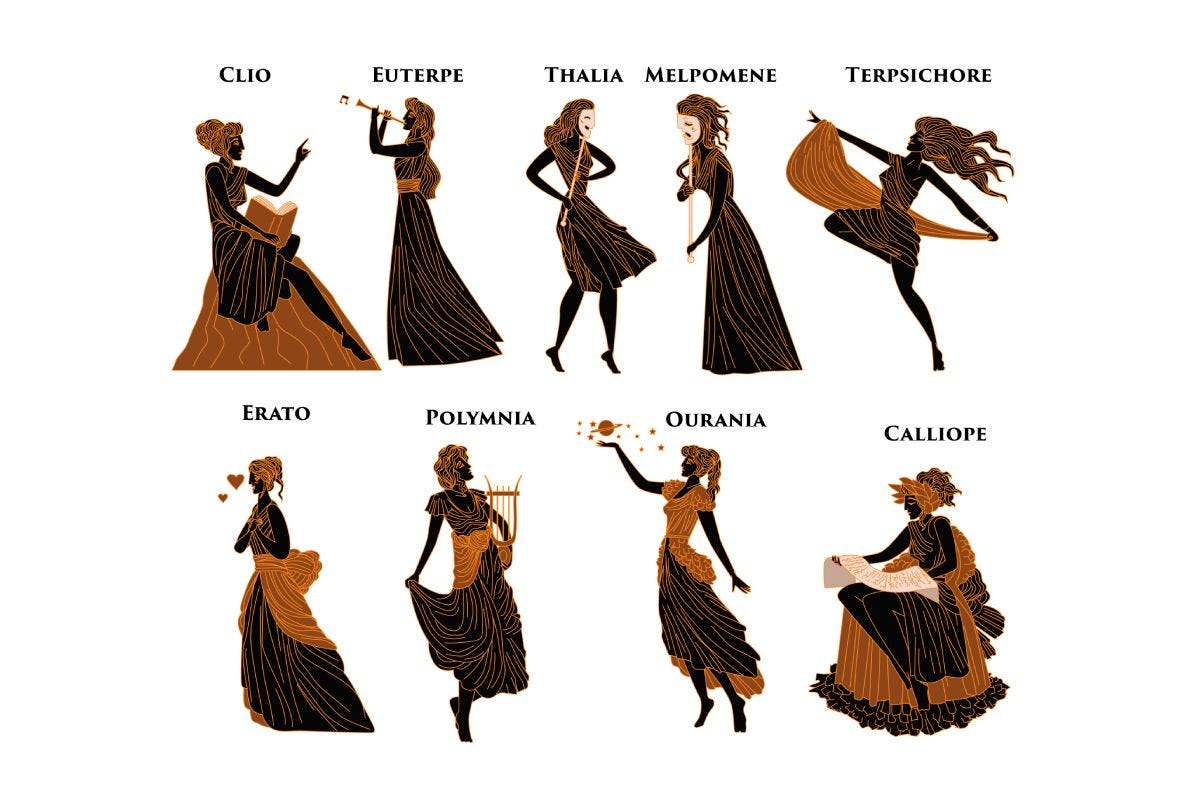
Μούσαις Χάρισι Θῦε: I have no way of checking that Aristotle University of Thessaloniki’s motto really is “Sacrifice to the Muses and the Graces,” but it pleases me that Wikipedia tells me it is.
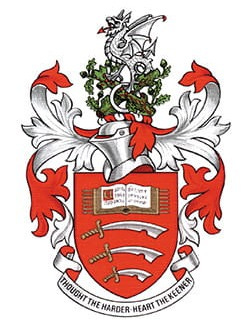
Thought the harder, heart the keener: Not, as you might expect, the fictional motto of Jedi University, but the actual motto of the University of Essex, U.K., founded in 1964.2
Omnia Extares: The Evergreen State College, in Olympia, Washington, would like us to believe its Latin(ish) motto means “Let it all hang out,” but Wikipedia informs us the “Latin is incorrectly constructed.” Wow, man, why so uptight? The college was founded in 1967 and opened for classes in 1971, in case you were wondering.
Cur non: It means “Why not” in French, and it’s the motto of Lafayette College in Easton, Pennsylvania, which is named for the Marquis de Lafayette, American Revolutionary hero, and which held its first classes in 1832.
Il futuro è passato qui: Wikipedia gives three possible interpretations of the Italian motto of Rome’s Sapienza (wisdom, knowledge) University, all equally woo-woo: “In here the future is already become past,” “The future has been here,” and “The future has stopped by here.”
My favorite college-motto story
Hard as it is to pick favorites, I’m going to single out one motto I find particularly charming and plain-spoken. It’s from an institution that was founded in 1894 in Swannanoa, North Carolina, as a high school for poor farm boys. In the 1920s it became a coed vocational school named for Warren H. Wilson, former superintendent of the Presbyterian Church’s Department of Church and Country Life; in 1967 it became a four-year college. In 1952 it earned the distinction of being one of the first colleges in the South to desegregate when college residents voted 54 to 1 to invite Alma Shippy, an African-American woman from Swannanoa, to join their ranks.
And the motto of Warren Wilson College?
“We’re not for everyone… but then, maybe you’re not everyone.”
Why is a graduation called a commencement when it’s more like a finale? My guess: It’s when a young person embarks on what we fondly call “real life.” And the word has been in use for centuries in academic circles, although with different meanings in the U.S. and the U.K. Here’s the OED’s sense #2: “The action of taking the full degree of Master or Doctor; esp. at Cambridge, Dublin, and the American universities, the great ceremony when these (also, in some cases other degrees, esp. in U.S., that of Bachelor) are conferred, at the end of the academical year.” In 1587 one W. Harrison wrote: “In Oxford this solemnitie is called an Act, but in Cambridge they vse the French word Commensement.”
Update: The motto is taken from a line in “The Battle of Maldon,” an epic poem “of uncertain date,” originally written in Old English. Thanks to Jesse Sheidlower for the citation.
I have seen a school motto, AIM HIGH, vandalised as I'M HIGH.
It's been a while since college Latin class, but isn't the Kyiv National Aviation University three infinitives? "To live! To conquer! To create!" Maybe it sounds better in Ukrainian?